
The NAACP's Moral Crisis: When Civil Rights Abandons Biological Reality
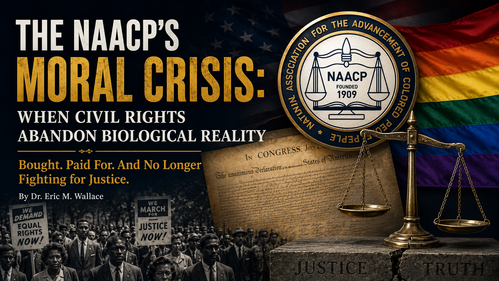
By Dr. Eric M. Wallace
For generations, the NAACP stood as one of America's most important defenders of human dignity. It confronted segregation, fought racial injustice, and championed equal protection under the law, appealing to the nation's moral conscience and calling America to live up to its founding ideals.
That moral authority is being squandered.
The NAACP's recent defense of transgender athletes competing in women's sports, articulated in its statement, NAACP Stands with Transgender Athletes Following Supreme Court Ruling, represents more than a policy disagreement. It reveals a profound identity crisis within an organization that once claimed to speak on behalf of Black Americans and the cause of justice.
The civil rights movement did not succeed by accident. It succeeded because it rested on transcendent truths. Dr. Martin Luther King Jr. spoke of natural law, God's justice, and the moral order of the universe. He did not argue that truth was subjective or that reality could be reconstructed according to personal preference. He appealed to eternal principles because he understood that rights are secure only when grounded in something higher than political power. That is the inheritance the NAACP is now spending down.
The issue here is not hatred, discrimination, or the worth of any individual—every person is created in the image of God and deserves dignity and respect. The question is narrower and harder: whether justice requires society to deny biological reality, and whether one group's claims should supersede the rights and opportunities of another.
There is a tragic irony in how far the answer has drifted from the movement's foundation. The civil rights movement was built upon objective realities, Black Americans could not change the color of their skin, and they faced discrimination because of immutable characteristics. The transgender movement, by contrast, asks society to affirm that biological sex itself is subjective, and that deeply held feelings should override objective realities. These are fundamentally different claims. To equate them is not only historically inaccurate but morally confusing, and it is exactly the kind of claim King's appeal to natural law was built to resist.
For decades, the NAACP rightly opposed arbitrary barriers that denied Black Americans equal participation in society. Now it advocates policies that could deny female athletes fair competition and scholarship opportunities by allowing biological males to compete in women's sports. That is not a defense of equality; it is the replacement of one perceived injustice with another.
The NAACP's embrace of this ideology has left many Black Christians and social conservatives wondering whether the organization still represents them at all. The Black community remains overwhelmingly rooted in the church and has historically affirmed marriage, family, and the biblical understanding of male and female. Yet the NAACP increasingly aligns itself with the most progressive cultural movements while showing little interest in representing the convictions of millions of faithful Black Americans.
Who, then, is the NAACP speaking for?
The organization that once challenged the cultural elites of its day now appears eager to gain their approval. Instead of standing on the transcendent principles that once made it formidable, it follows the latest ideological trend. Many Americans, Black and white, Democrat and Republican, religious and secular, are increasingly uncomfortable with policies that force women and girls to sacrifice fairness in the name of inclusion.
The tragedy is not merely political. It is moral. The NAACP's support for transgender ideology is part of a broader trend in American institutions: the substitution of feelings for facts, ideology for biology, and activism for wisdom. In seeking to be culturally relevant, they become morally unmoored, and justice cannot be sustained when truth itself becomes negotiable.
The Black community does not need organizations that echo the latest cultural fashions. It needs leaders willing to defend truth, protect women and girls, strengthen families, and uphold the moral principles that have sustained our communities through generations of adversity. The future of civil rights depends not on abandoning reality but on recovering it.
As I have often argued through the R.I.S.E. Principles: Responsible Government, Individual Liberty and Fidelity, Strong Family Values, and Economic Empowerment—lasting justice requires moral clarity. Without truth there can be no justice. Without moral conviction there can be no genuine progress. And without a willingness to stand against the cultural currents of the day, even our most venerable institutions can lose their way.
The NAACP once helped America confront its moral failures. Today, many Americans are asking whether the organization has confronted its own.
For generations, the NAACP stood as one of America's most important defenders of human dignity. It confronted segregation, fought racial injustice, and championed equal protection under the law, appealing to the nation's moral conscience and calling America to live up to its founding ideals.
That moral authority is being squandered.
The NAACP's recent defense of transgender athletes competing in women's sports, articulated in its statement, NAACP Stands with Transgender Athletes Following Supreme Court Ruling, represents more than a policy disagreement. It reveals a profound identity crisis within an organization that once claimed to speak on behalf of Black Americans and the cause of justice.
The civil rights movement did not succeed by accident. It succeeded because it rested on transcendent truths. Dr. Martin Luther King Jr. spoke of natural law, God's justice, and the moral order of the universe. He did not argue that truth was subjective or that reality could be reconstructed according to personal preference. He appealed to eternal principles because he understood that rights are secure only when grounded in something higher than political power. That is the inheritance the NAACP is now spending down.
The issue here is not hatred, discrimination, or the worth of any individual—every person is created in the image of God and deserves dignity and respect. The question is narrower and harder: whether justice requires society to deny biological reality, and whether one group's claims should supersede the rights and opportunities of another.
There is a tragic irony in how far the answer has drifted from the movement's foundation. The civil rights movement was built upon objective realities, Black Americans could not change the color of their skin, and they faced discrimination because of immutable characteristics. The transgender movement, by contrast, asks society to affirm that biological sex itself is subjective, and that deeply held feelings should override objective realities. These are fundamentally different claims. To equate them is not only historically inaccurate but morally confusing, and it is exactly the kind of claim King's appeal to natural law was built to resist.
For decades, the NAACP rightly opposed arbitrary barriers that denied Black Americans equal participation in society. Now it advocates policies that could deny female athletes fair competition and scholarship opportunities by allowing biological males to compete in women's sports. That is not a defense of equality; it is the replacement of one perceived injustice with another.
The NAACP's embrace of this ideology has left many Black Christians and social conservatives wondering whether the organization still represents them at all. The Black community remains overwhelmingly rooted in the church and has historically affirmed marriage, family, and the biblical understanding of male and female. Yet the NAACP increasingly aligns itself with the most progressive cultural movements while showing little interest in representing the convictions of millions of faithful Black Americans.
Who, then, is the NAACP speaking for?
The organization that once challenged the cultural elites of its day now appears eager to gain their approval. Instead of standing on the transcendent principles that once made it formidable, it follows the latest ideological trend. Many Americans, Black and white, Democrat and Republican, religious and secular, are increasingly uncomfortable with policies that force women and girls to sacrifice fairness in the name of inclusion.
The tragedy is not merely political. It is moral. The NAACP's support for transgender ideology is part of a broader trend in American institutions: the substitution of feelings for facts, ideology for biology, and activism for wisdom. In seeking to be culturally relevant, they become morally unmoored, and justice cannot be sustained when truth itself becomes negotiable.
The Black community does not need organizations that echo the latest cultural fashions. It needs leaders willing to defend truth, protect women and girls, strengthen families, and uphold the moral principles that have sustained our communities through generations of adversity. The future of civil rights depends not on abandoning reality but on recovering it.
As I have often argued through the R.I.S.E. Principles: Responsible Government, Individual Liberty and Fidelity, Strong Family Values, and Economic Empowerment—lasting justice requires moral clarity. Without truth there can be no justice. Without moral conviction there can be no genuine progress. And without a willingness to stand against the cultural currents of the day, even our most venerable institutions can lose their way.
The NAACP once helped America confront its moral failures. Today, many Americans are asking whether the organization has confronted its own.
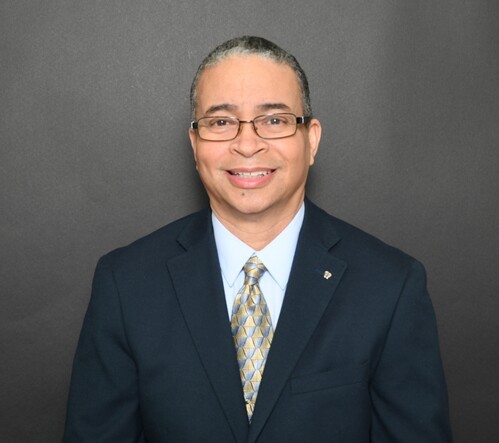
Dr. Eric M. Wallace, author of the new book, The Heart of Apostasy: How The Black Church Abandoned Biblical Authority for Political Ideology--And How to Reclaim It, is a trailblazing scholar, dynamic speaker, and passionate advocate for faith-based conservatism. With a distinguished academic background and an unwavering commitment to biblical truth, Wallace has become a leading voice challenging cultural and political narratives that conflict with a biblical worldview.
Wallace holds postgraduate degrees in biblical studies (M.A., ThM, Ph.D.), Wallace is the first African American to earn a Ph.D. in biblical studies from Union-PSCE (now Union Presbyterian Seminary). His scholarship and ministry experience equip him to address today’s most pressing sociopolitical issues through the lens of faith, reason, and historical accuracy.
Wallace holds postgraduate degrees in biblical studies (M.A., ThM, Ph.D.), Wallace is the first African American to earn a Ph.D. in biblical studies from Union-PSCE (now Union Presbyterian Seminary). His scholarship and ministry experience equip him to address today’s most pressing sociopolitical issues through the lens of faith, reason, and historical accuracy.
Recent
The Big Tent Party: Right? Sure? Whatever?
September 30th, 2026
Maybe we've become too Selfish?
August 20th, 2026
Equal Before God, Unequal in Gifts
August 20th, 2026
Beyond Personality Politics: A Biblical Framework for Evaluating Our Leaders
July 27th, 2026
The NAACP's Moral Crisis: When Civil Rights Abandons Biological Reality
July 8th, 2026
Archive
2026
January
March
THE GEOPOLITICAL CHESSBOARD AND THE SPIRITUAL WAR WE’RE IGNORING--Part 1THE SPIRITUAL DIMENSION AND THE CHURCH’S COMPLICITY--Part 2Racism, Sin, and the Republican Party: A Christian ResponseA Moment of Reflection on the Life of Rev. Jesse Jackson Sr.Black Americans Are Not Hyphenated CitizensWhen “Jesus Never Said That” Becomes a License for ApostasyWhen Scripture Is No Longer First: The Heart of Apostasy in the Black Church and American PoliticsDemocrats Good……Trump Bad
April
When Conviction Becomes Costly: Faith, Culture, and the Silence of the ChurchNo Savior but Christ: When Politics Crosses a Sacred LineWhat Good Is a Worldview If We Are Not Guided by It?When Resurrection Sunday Becomes Interfaith: Why the Church Must Guard the GospelSocialism in the City: When Government Tries to Play GodWords Matter: The Dangerous Illusion Behind “Mass Incarceration”More Degrees, More Debt, Less Direction: Why Illinois Is Looking the Wrong Way on Workforce DevelopmentNow, I suppose, he’s a Hitlerian KingJustice Without Partiality: What the Louisiana Ruling Reveals About America’s Heart
May
June
July
America at 250 and Freedom's Journal at 200: The Unfinished Work of FreedomThomas Jeremiah, America's Founding, and the Importance of Telling the Whole StoryThe NAACP's Moral Crisis: When Civil Rights Abandons Biological RealityBeyond Personality Politics: A Biblical Framework for Evaluating Our Leaders
2025
February
March
July
September
October
November
2024
January
Cartoon 01/01/24Cartoon 01/02/24Claudine Gay Betrayed the American Values of My Black Elders to Exploit White GuiltCartoon 01/03/24Cartoon 01/05/24Cartoon 01/06/24Cartoon 01/07/24Cartoon 01/08/24We need a David, not a SaulCartoon 01/13/24Cartoon 01/09/24Cartoon 01/10/24Cartoon 01/11/24Cartoon 01/14/24Cartoon 01/12/24What Happens to a King Deferred? A ReduxCartoon 01/15/24Cartoon 01/16/24The Good Guys with Guns Part 1Cartoon 01/17/24America Works. DEI Doesn’t.Cartoon 01/18/24Cartoon 01/23/24Good Guys with Guns Part 2Cartoon 01/19/24Cartoon 01/21/24Cartoon 01/22/24Cartoon 01/24/24Cartoon 01/26/24Cartoon 01/25/24Cartoon 01/27/24
No Comments